
Role
UX Designer. Facilitated meetings, workshops, user interviews. I was responsible for all the visual deliverables of the projects.
Tools
Sketch; Axure; Pen&Paper; InVision;
The Challenge
Backbase has a fully integrated banking platform that allows financial institutions to connect with their customers in a variety of scenarios. The insurance quotation is lead by services which provides several quotes from different companies but no banks. We wanted to provide a way to banks to influence on the customers decisions by offering a reliable car insurance quote in a competitive price. This could strengthen the customer experience.
Primary goal
Deliver a seamless flow for a car insurance quotation embed in an existent client banking app. The user should be able to get a quote directly from their banking and understand how does it impact in their finance by switching for a preferred bank insurance offer.
The audience
The potential clients of this solution were financial institutions all over the world. The end user of this quotation form are drivers who wants to apply for new insurance or switch for a better insurance plan. We decided to focus our MVP on the everyday car driver from UK, Netherlands and US.
Desk research
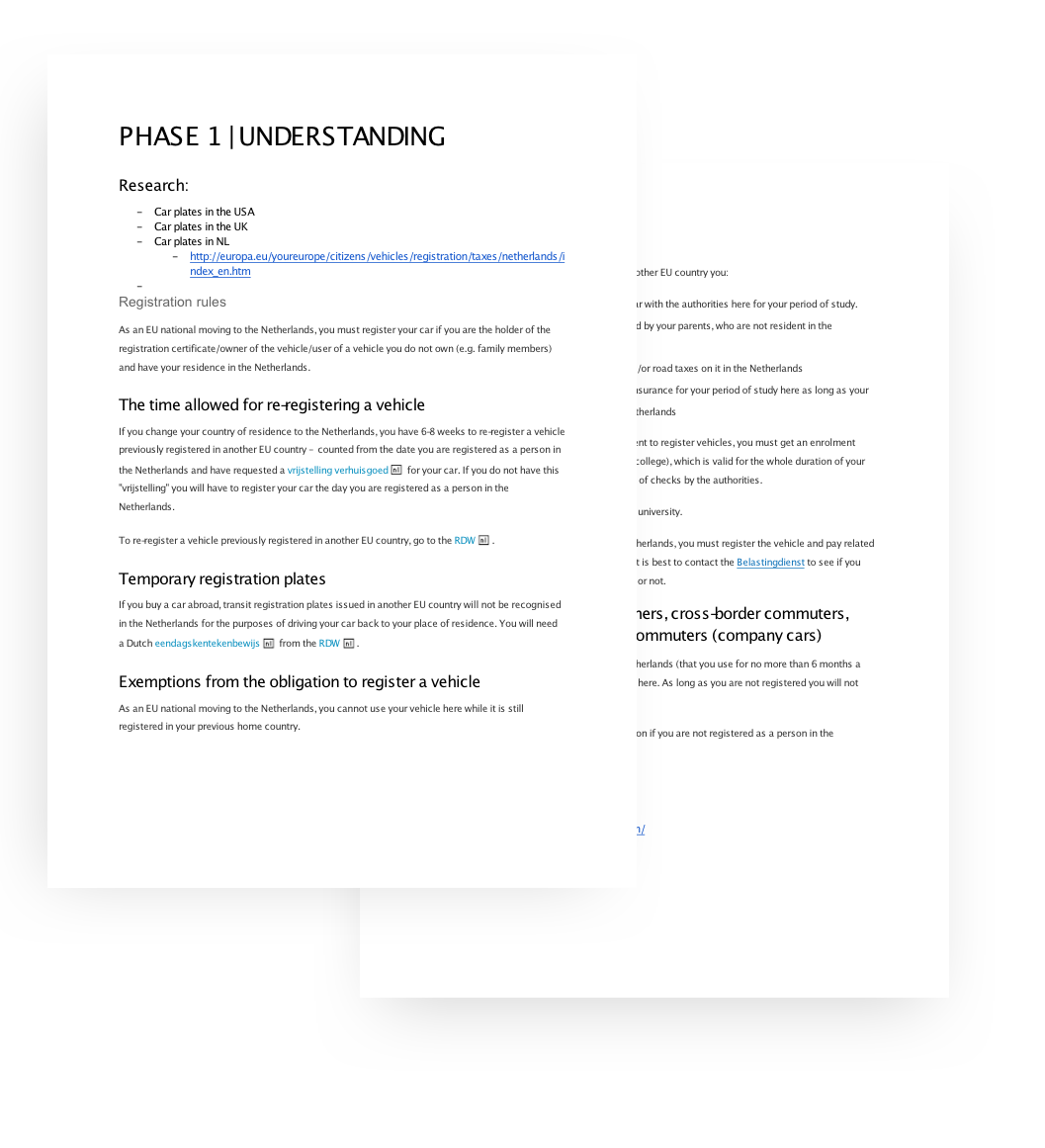
The secondary research was crucial to my process, I studied content about policies involving Insurance in different countries. The objective was to frame te context and find insights to build the flow.
Insights
The veicule identification
The veicules plates changes everywhere, but the veicule identification number only refers to one single veicule. This identification number is the most reliable form of ID.
Quote forms are very similar.
In my research I realised most of the Insurance forms are pretty similar. This helped me to identify the commons questions I should have on my quotation flow.
Benchmarking
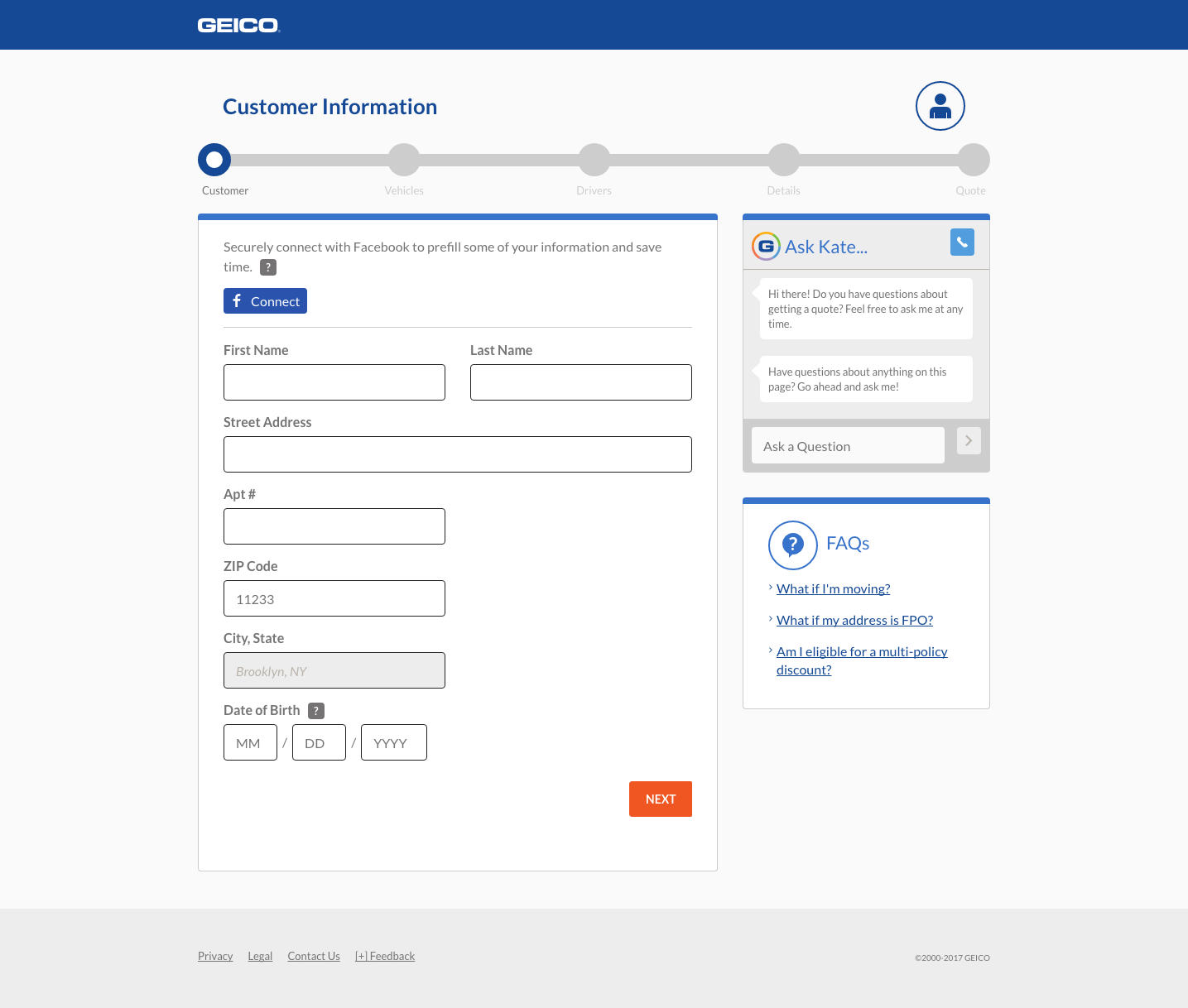
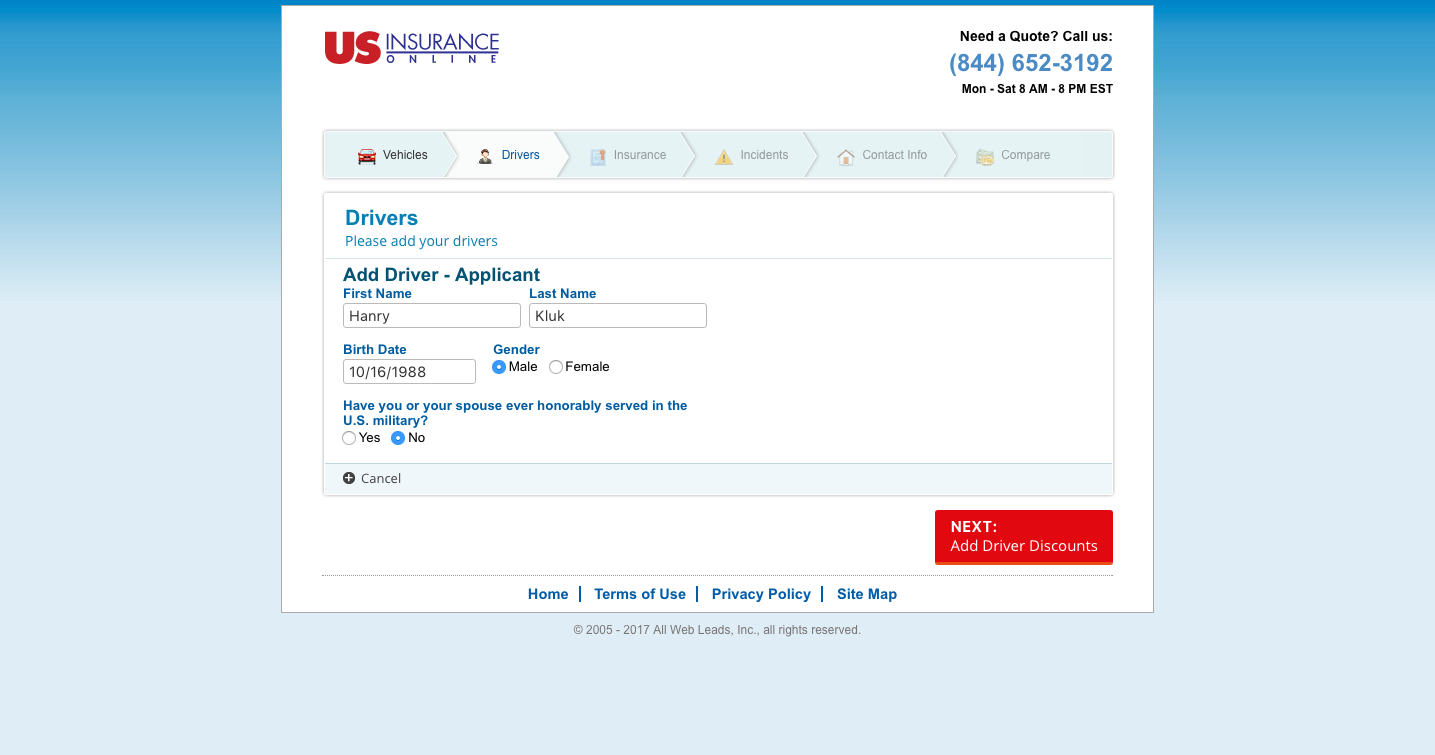
I studied and compared two different products of two different countries, to understand how people used to ask for a insurance quotes.
The main insights:
Both of the competitors offers a similar solution. They provide a form with many questions and a step by step process.
There's many ways to ask for help along the flow, such as FAQ or Customer support Chat.
2 of them wanted to know about if the veicule was shared. This could have a strong impact on the price of the quote.
Personas
For this solution I decided to stick to the banking persona we used to use in the R&D department. This persona differs slightly from EU and US, but in general they have similar motivations and activities.

Max De Groot
Software engineer
Early adopter
Used to search for promotions
Wants to take care of his car and family
Car: Volkswagen Golf 2016 Blue; Plate RG-NF-28
Motivations: Save money for the baby; Avoid risks in the traffic;
Jobs to be done: Find a better insurance plan for the car; Apply for the insurance.
User tasks
The user tasks helped me to develop the scenarios and find the the jobs by the perspective of the persona. After my research it became more clear our opportunities I wanted to tackle. The behaviour of the user was crucial to validate the ongoing flow. I spoke to some of internal specialists in order to validate the flow and after that I started to observe how people commonly use existent Insurance quote flows.
Figure out the importance of an insurance plan (awareness)
Research for information on the internet Ask for a lowest/relevant price
Analise the results and quotes (internet)
Apply for the Plan (opportunity for the banks)
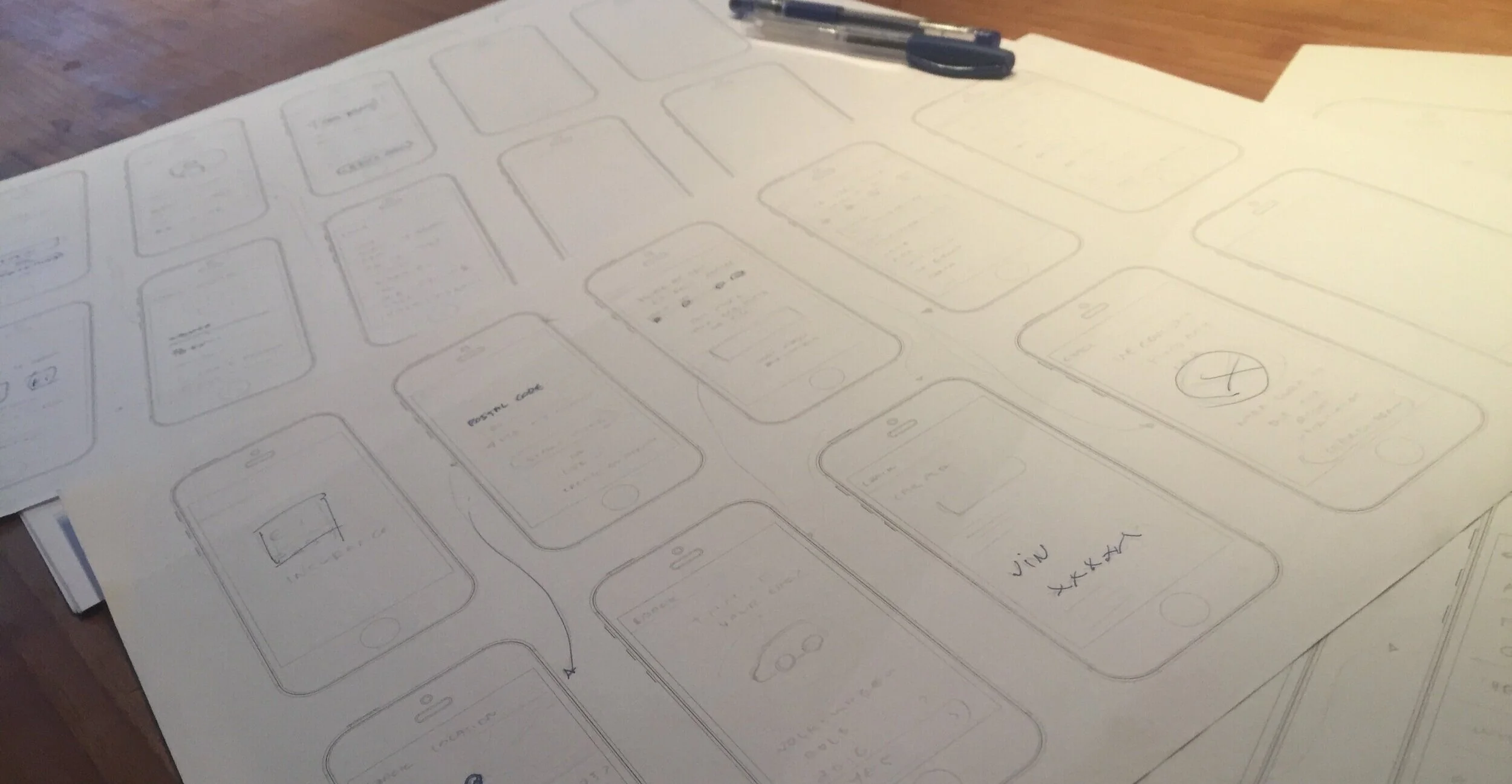
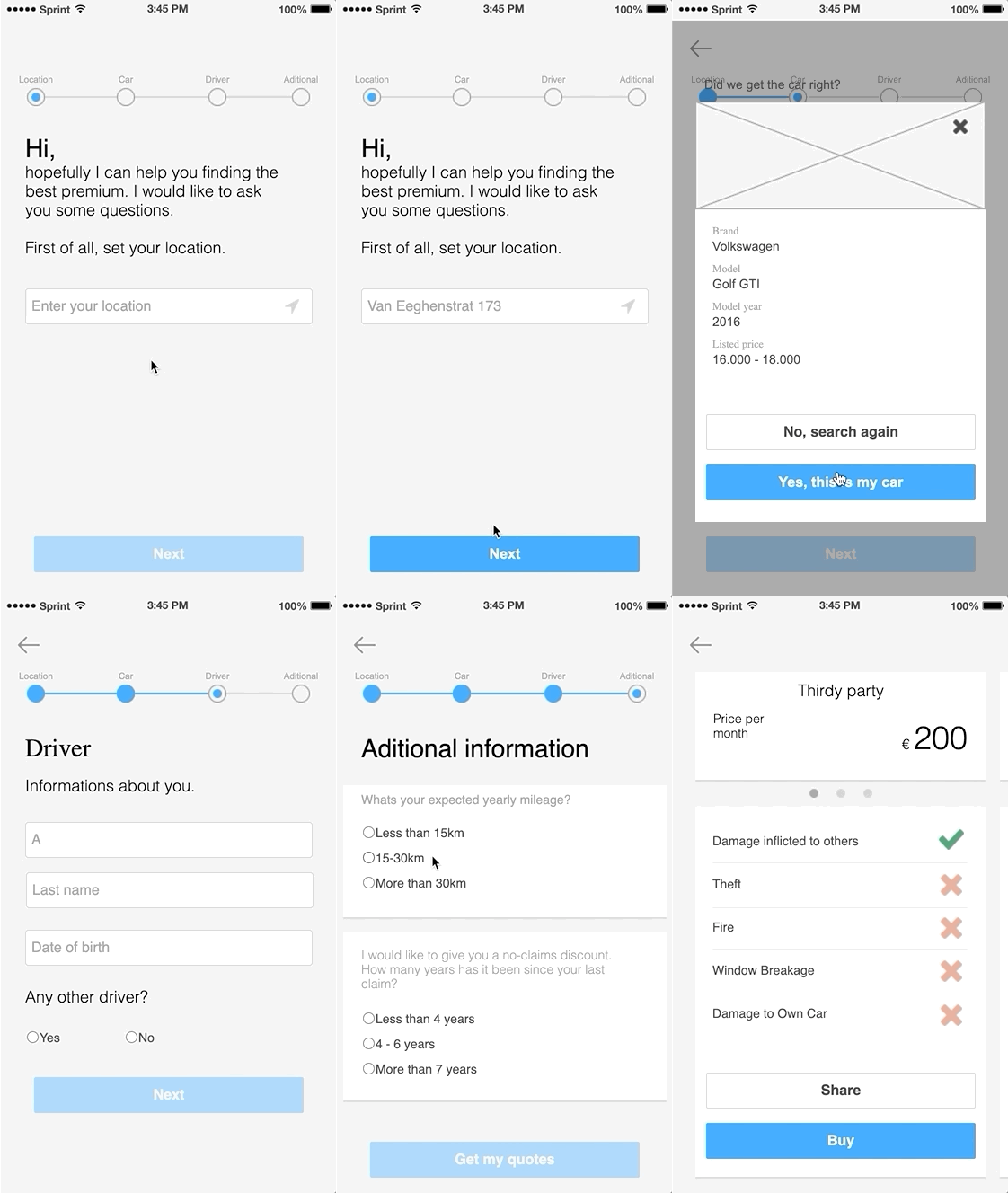
Drawing scenarios
Drafting the main scenarios helped me to identify not only the most common flow but also the edge cases, such the compulsory test the driver need to provide if it's over 70.
With this flow in the paper it became easy to move to the digital prototype once the main scenarios were covered.
Usability testing
For this project I wanted to have user validations as early as possible, so I decided to use the guerrilla approach, asking people on Pubs and cafes about their opinion.
Soon as I started to validate I realised that that was some frictions on the interaction with the static prototype. I wanted to collect more evidences about the car plate and VIN number. But this wasn't possible to test without the real input. That's why I decided to move to Axure.
Fully interactive prototype. Helped me to figure out problems with interactions, tiny details in the interface, and validate the flow.
Building blocks
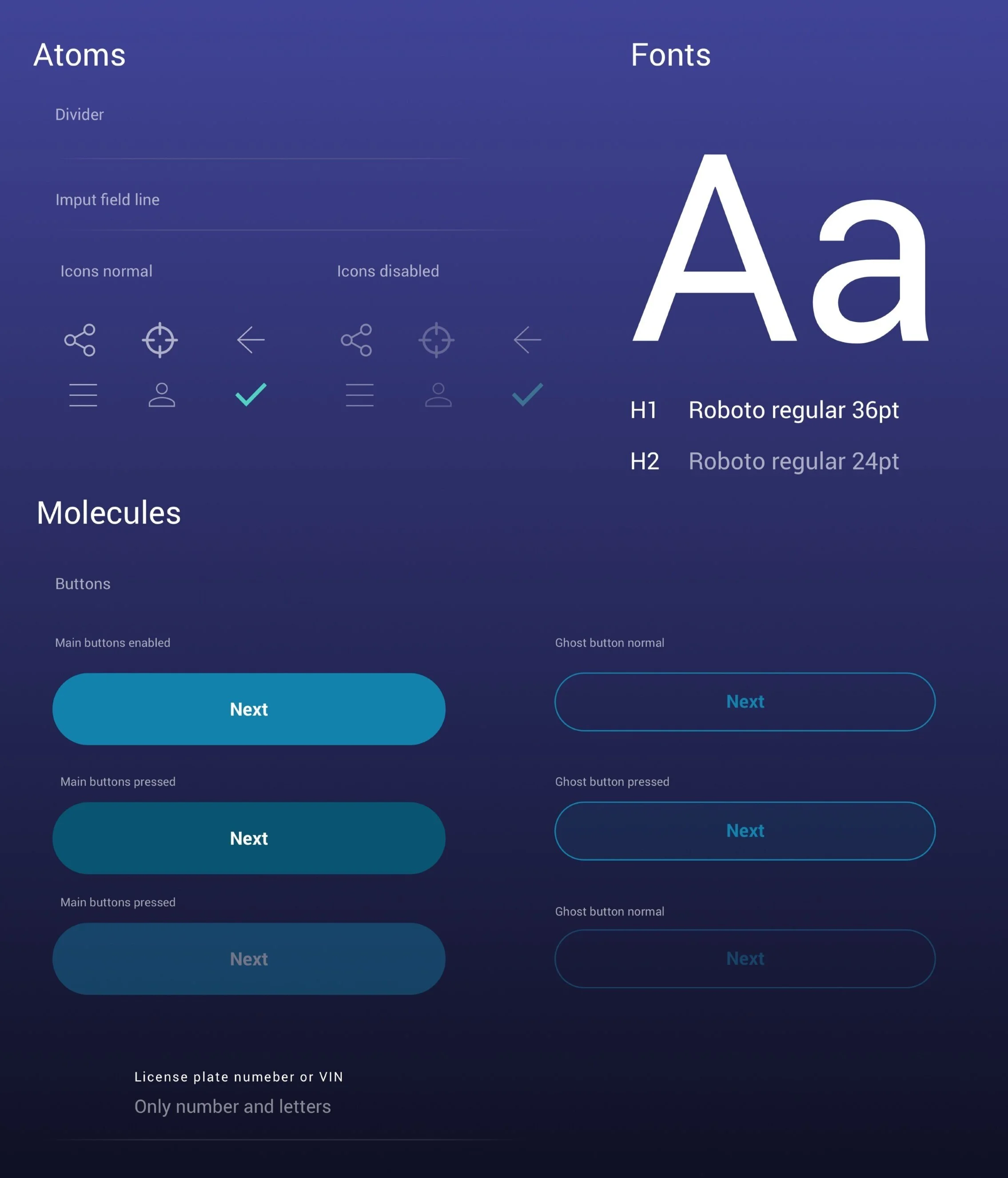
Components turned into a symbols could be easy dragged from a library to a new interface, without change the general aspects or behaviour. A library also helps the developers to create their own mockups or research for informations about specs.
This library was created during the UI design process. All the components are properly separated from atoms to organisms.
Even with the simple flow I decided to build my own styleguide from the beginning. This helped me to explain the scalability of the solution for the stakeholders.
What's that matter
When we’re building Omni Channel and white label solutions, efficiency and consistency should be a game changer.
Products that has a consistent shareable content to build interfaces, tend to be more efficient.
A library of components push the consistency to any areas of the company and empower people to think in a big picture.
BackBase Car Insurance Quote
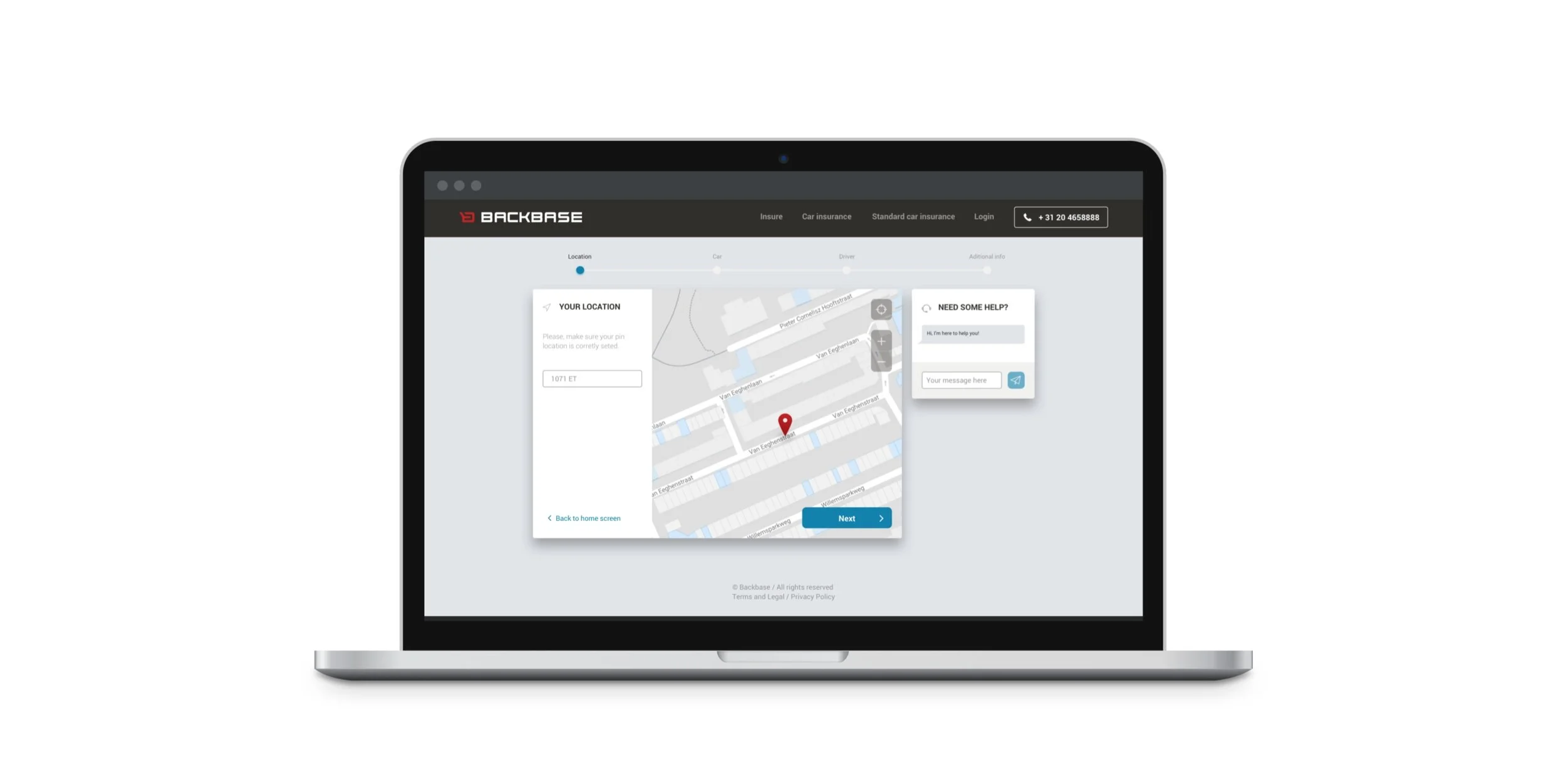
Location
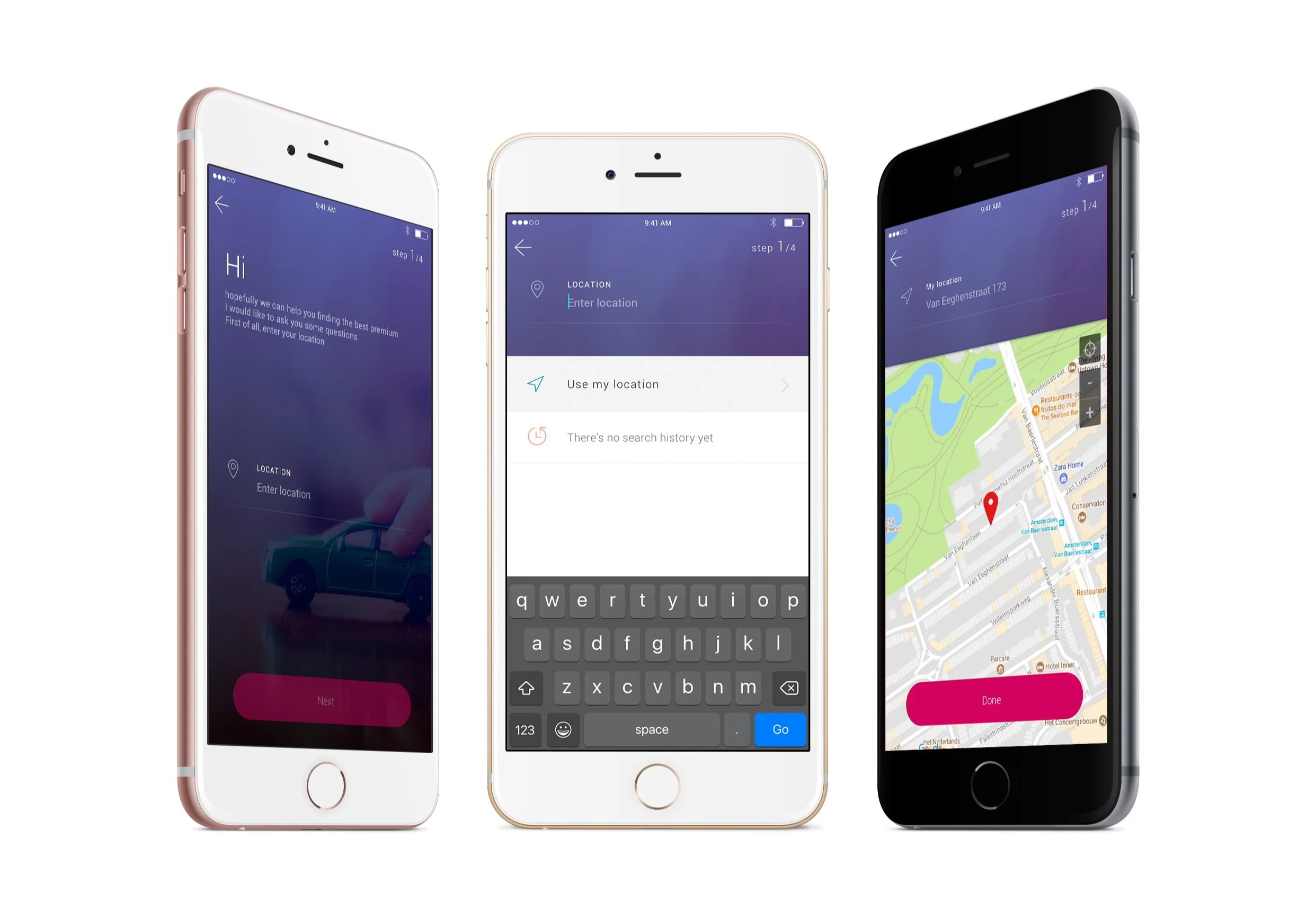
Asking for the location of the user in the beginning of the process, should avoid misunderstanding with currencies and birth date format.
Other critical aspects of the policies in each country could affect the experience of the user, specially from EU to US, which the format changes a lot.
Therefore i brought he location in the beginning. Filtering the profile by location should also bring relevant data for the sales team.
Finding the car
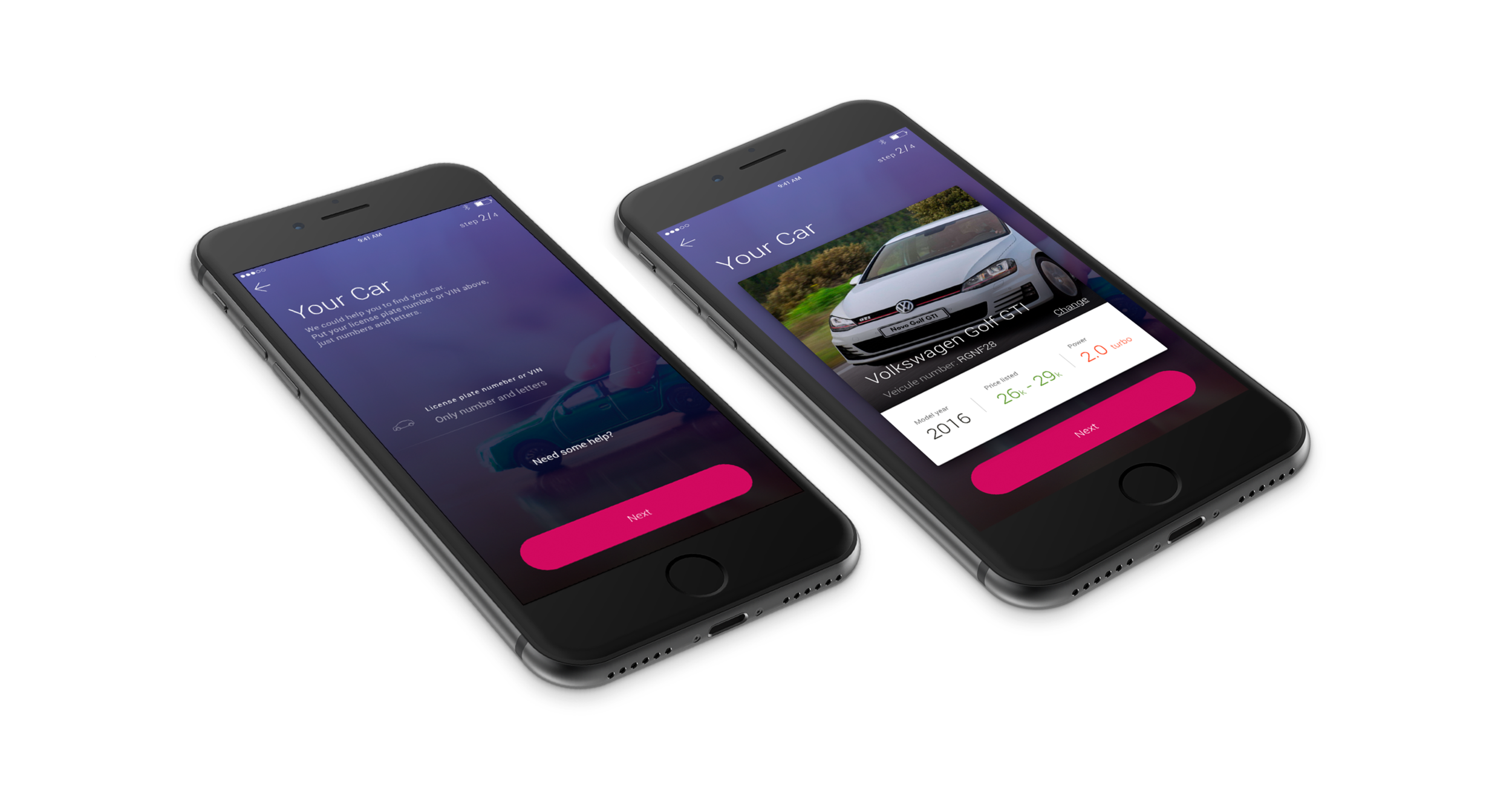
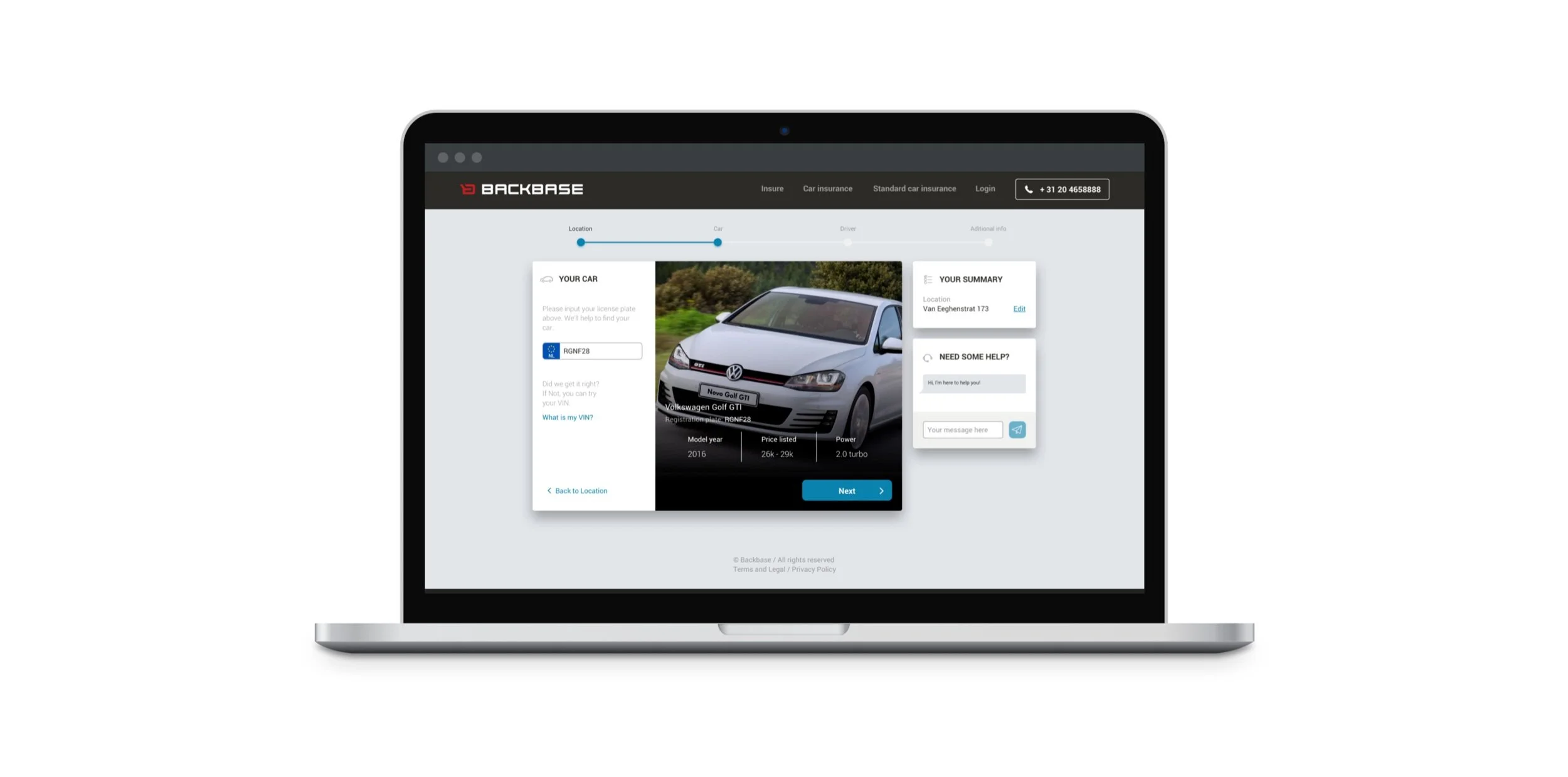
In my research I discovered that VIN is the master validator in any kind of veicule, but this is not so familiar among car drivers. So, i decided to give the freedom to user to select how information is better or easier, the car plate number or the VIN.
In this case the inline validator was unusual, because the car plates don't follow any order. So to avoid confusion I decided to leave the input free.
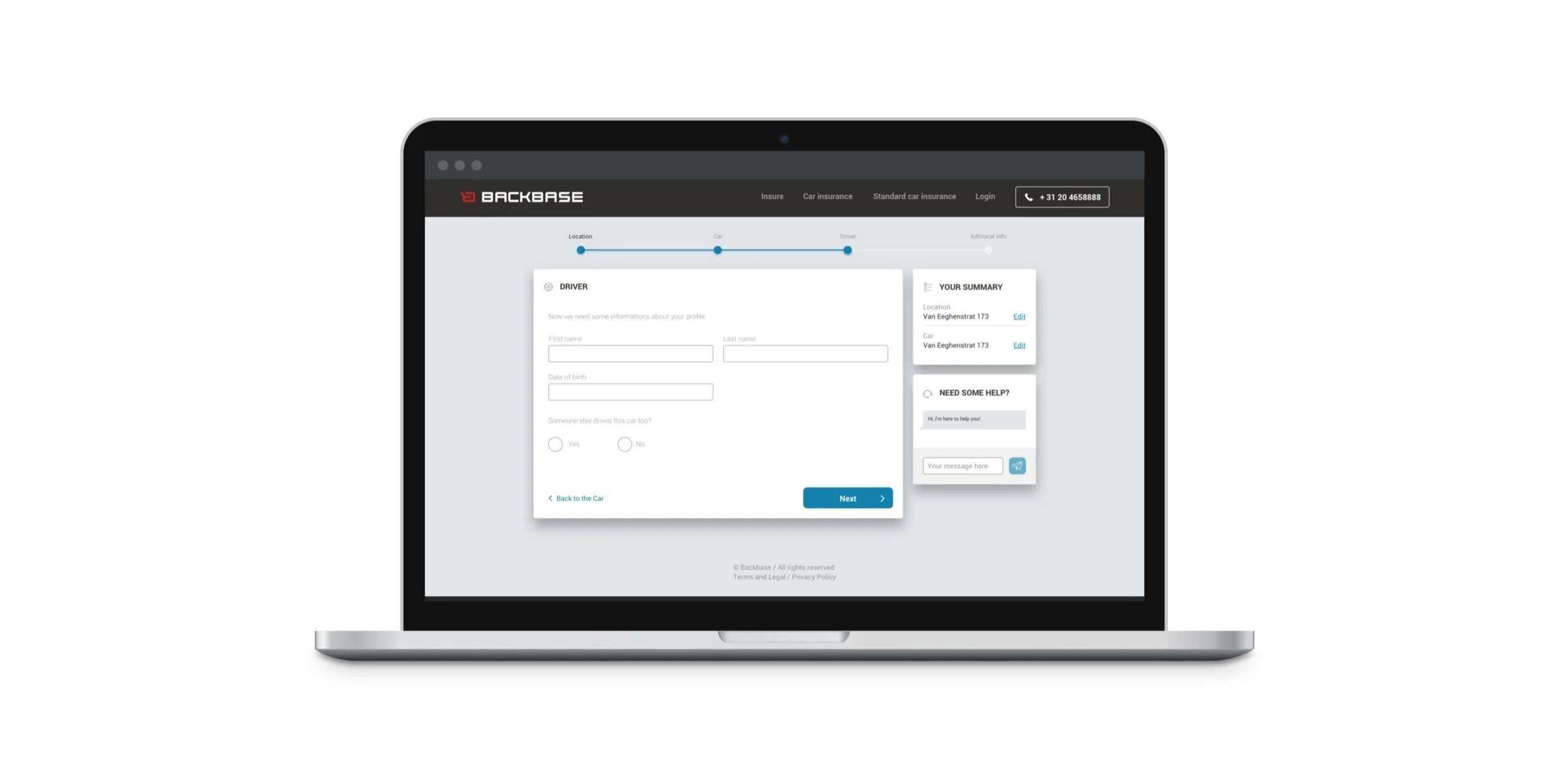
Who's the Driver?
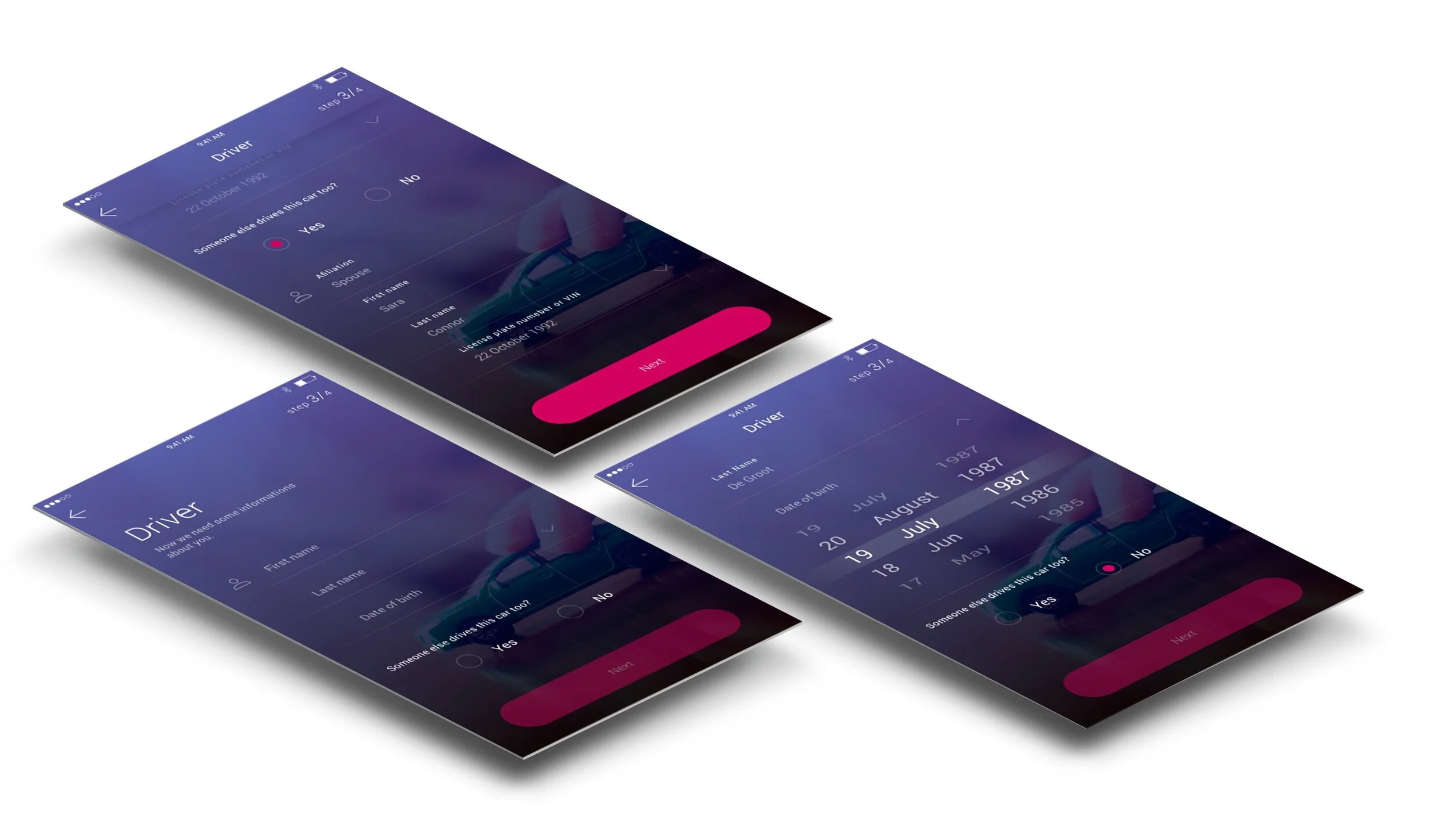
The driver information is usual to the banks collect some data, or deliver personal content, like emails or more accurate answer.
In my research I noticed a important aspect of the quote. If someone else drives the car too, it could affect directly the costs of the insurance plan.
The birth date was changed for a date time picker component. It helps the user to understand well the information about months and days.
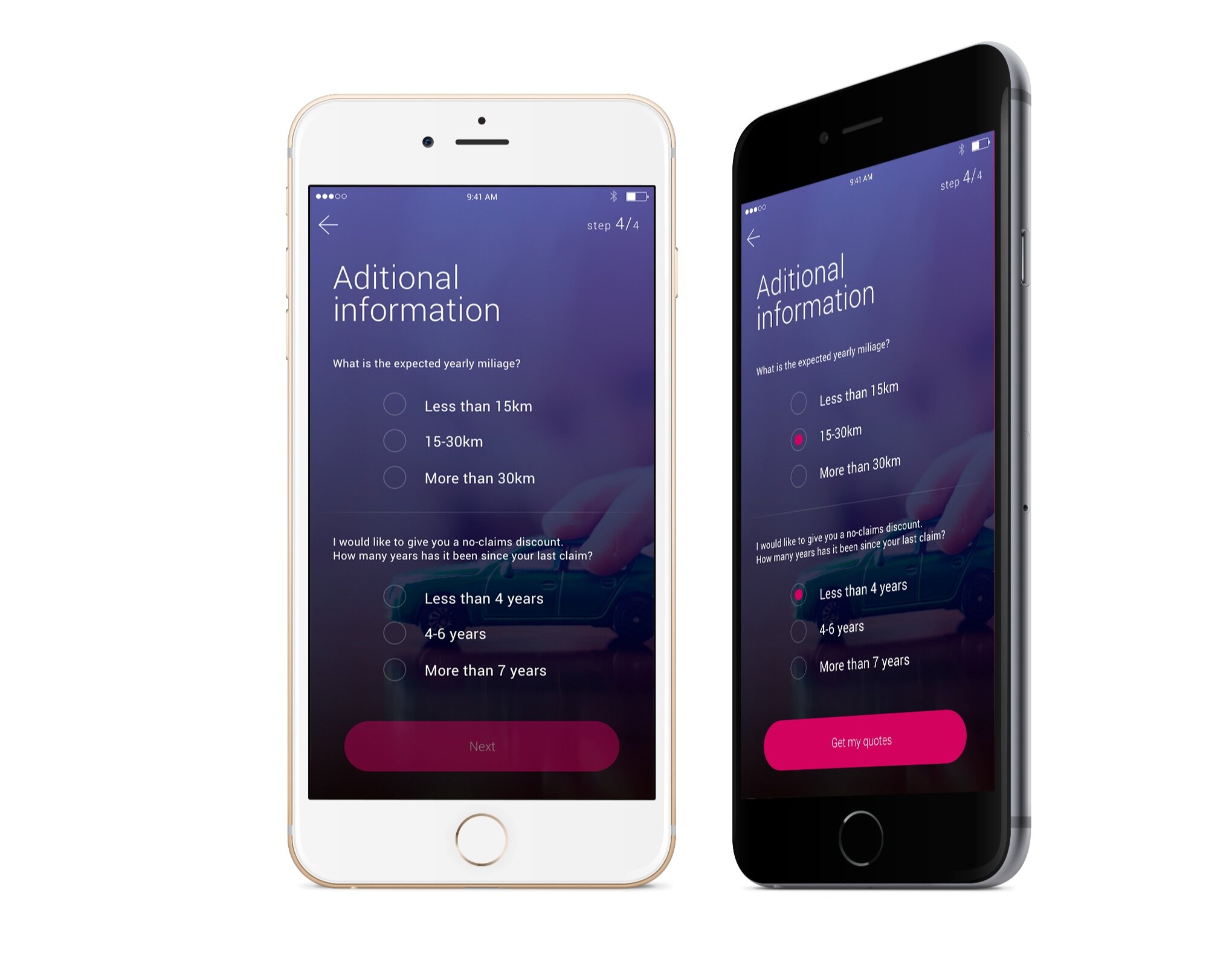
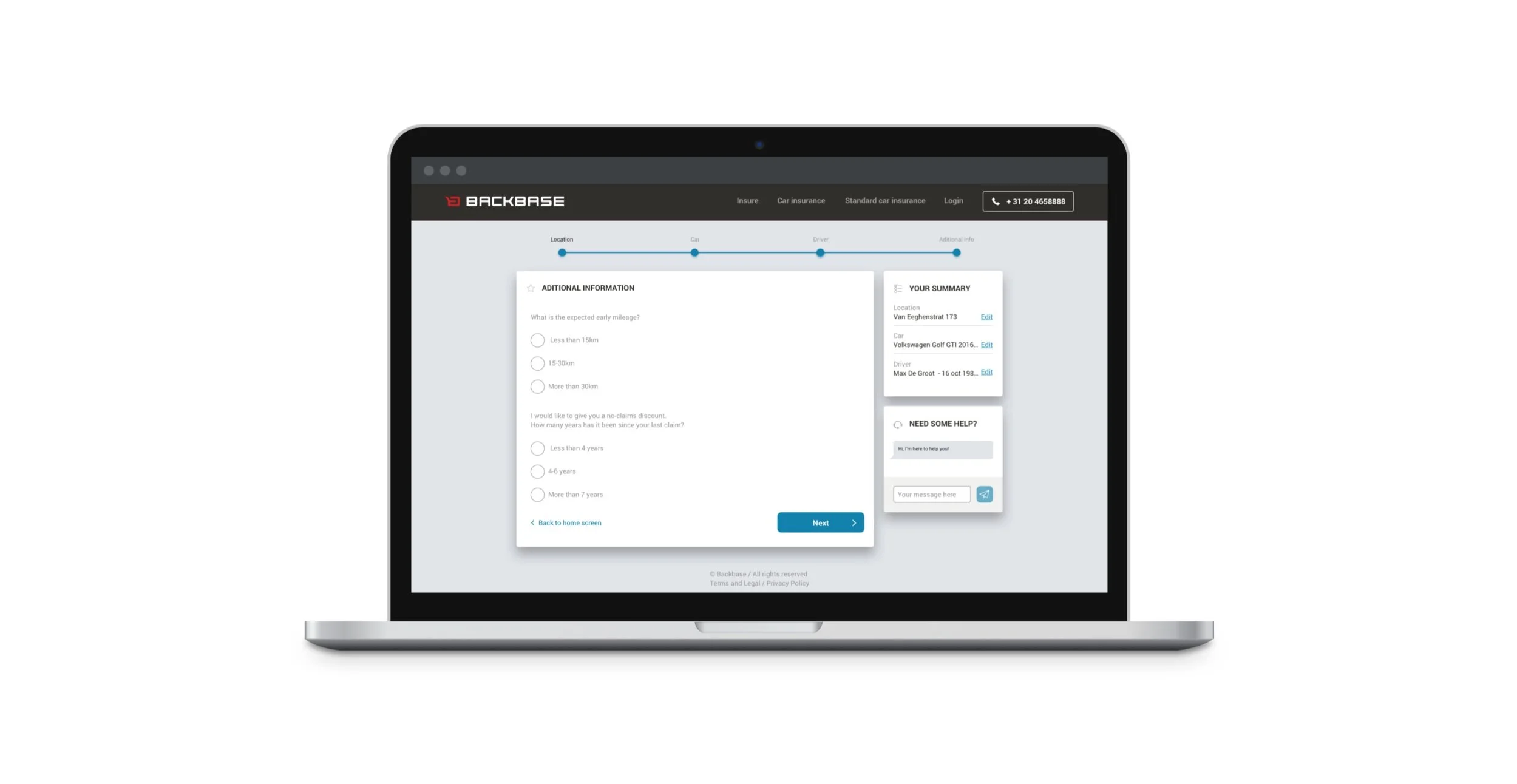
Important details
Some question that are related to a behaviour of the driver than the profile or the car, where clustered in a one topic.
I believe that could reduce the cognitive load during a process of a input. If we put familiar informations well related, this tend to be even more understandable.
Getting the Quotes
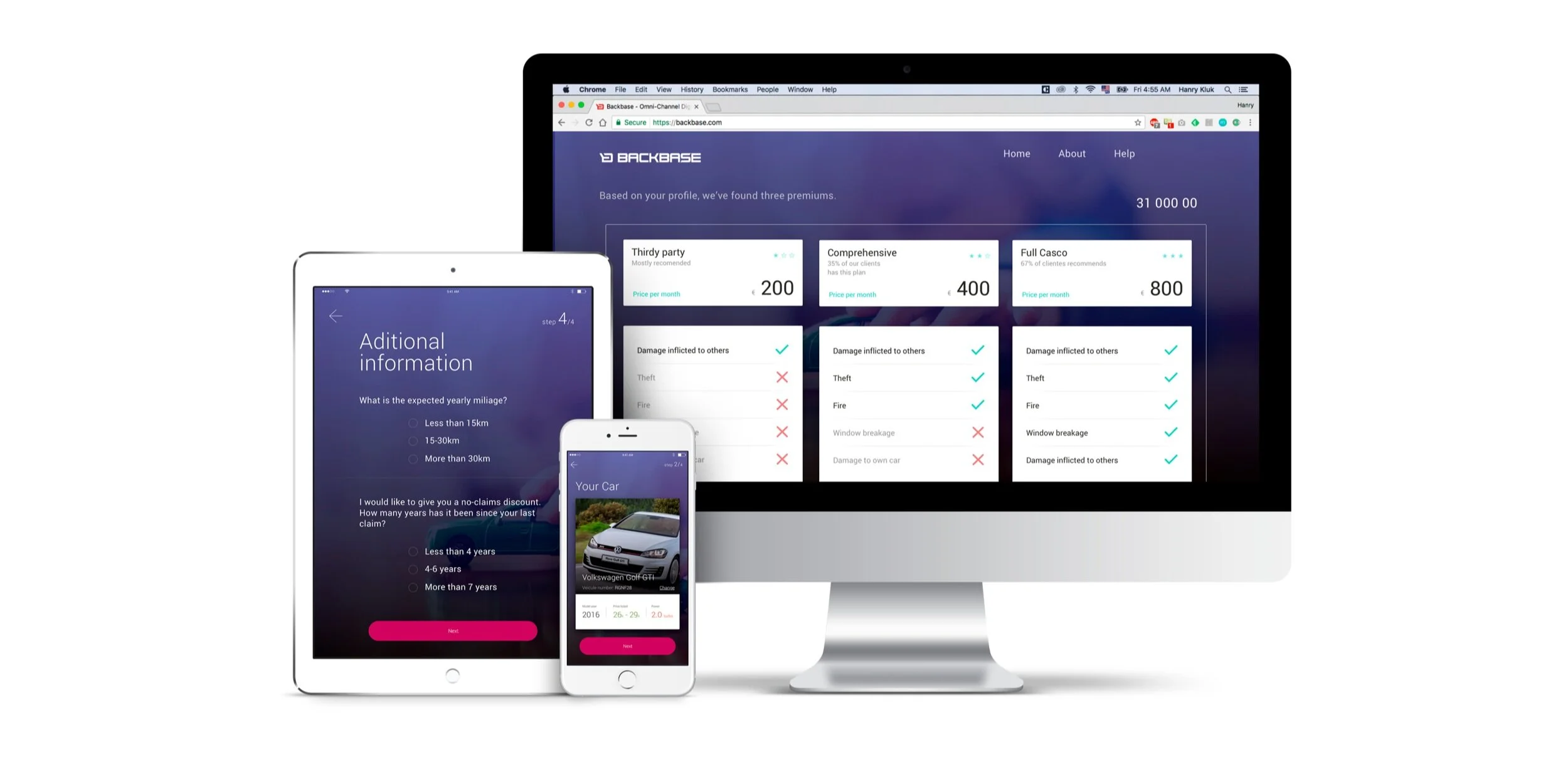
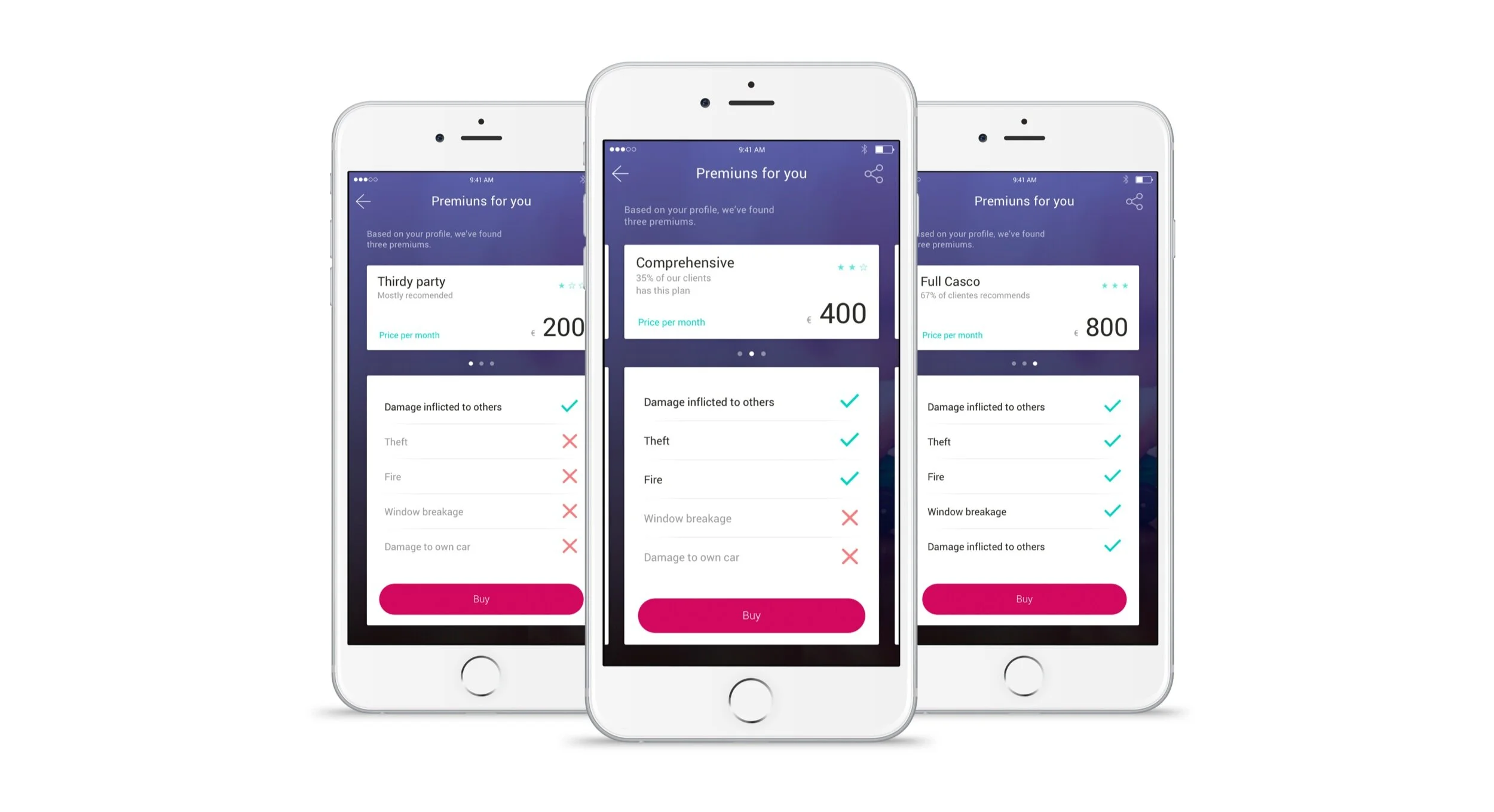
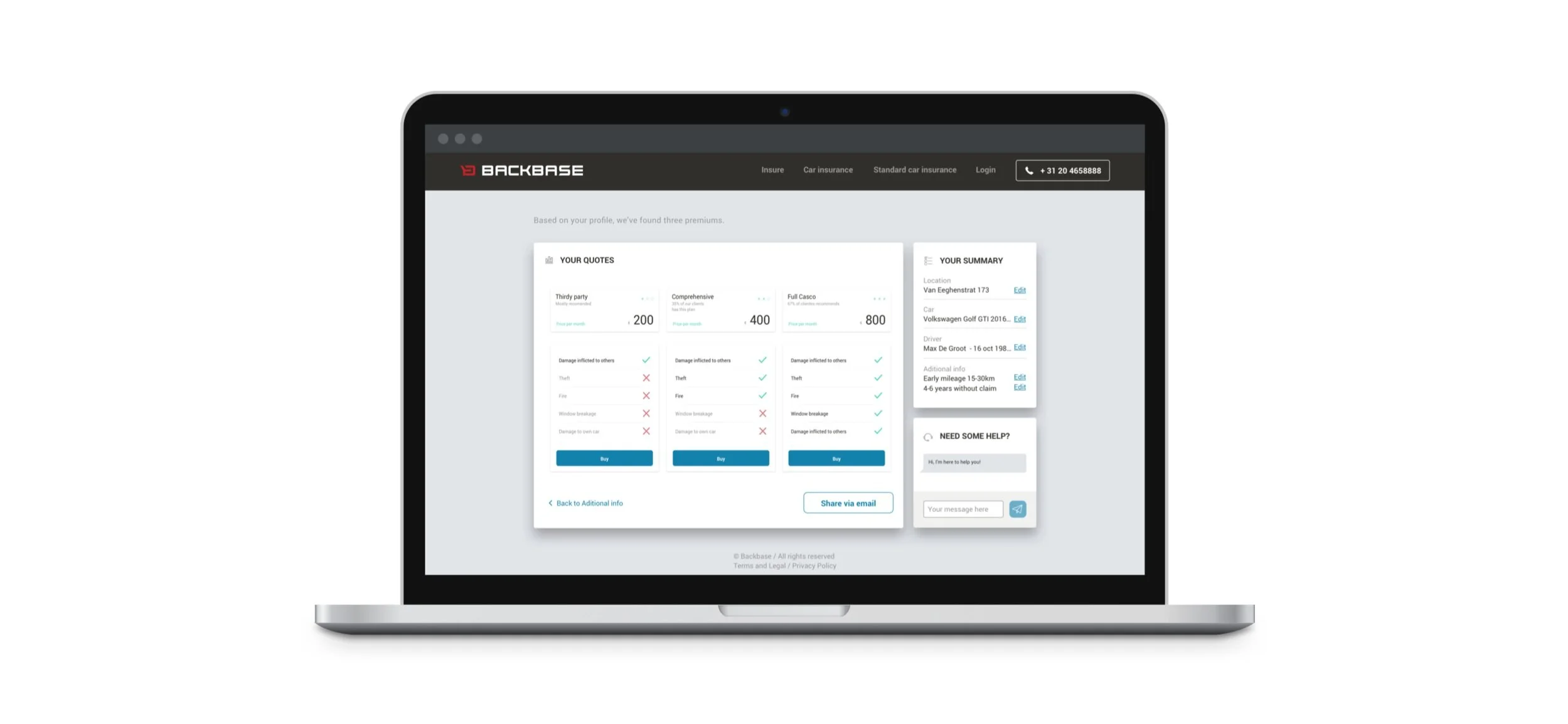
The results were separated in cards individually.
In the smartphone this is a behaviour very well recognised. The carousel or taps bars are already a common sense in mobile.
In a bigger device, the card lose the carousel behaviour and become a list.
I decided to put some small data in each card, because it could help the user to selected based on recommendations.
Learning and Results
This project was made together with the Internal design team of AIB Bank from Ireland. This was a very good exploration of the potential of the BackBase Forms functionality.
My main takeaway from the projects, beyond the fun I had from learning more about car insurance, was the issue behind the VIN, Veicule Identification Number. The internal tem believed this was a code very familiar for drivers, but soon as I started talking to people I realised they were far from familiar. I didn’t have more time to work on it but I would like to explore this in the future.
This functionally was released in 2019, and now Banks can also build their own car insurance quote.